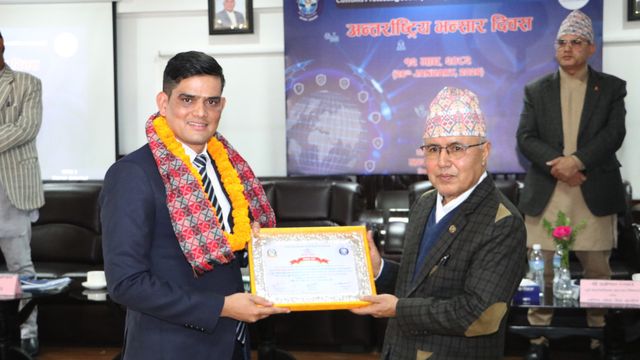
International Customs Day is celebrated each year on 26 January and recognizes the critical functions of Customs administrations, such as societal and economic security, trade facilitation, and economic prosperity. Every year, the World Customs Organization (WCO) puts out its International Customs Day theme to underscore the most recent challenges and opportunities facing Customs. The WCO theme for 2025 is “Customs Delivering on its Commitment to Efficiency, Security, and Prosperity”. This theme indicates the commitment to the development and modernization of Customs processes around the globe.
Nepal Customs has made notable progress in using digital tools and automation, with ASYCUDA World as the main system for declarations in major Customs offices. Many modules support data-based operations, including risk-based targeting, creating risk profiles, forecasting trade and revenue, valuation, and providing trade statistics to the public. The launch of a National Single Window system has made trade easier by allowing regulatory bodies to issue licenses, permits, certificates, and other documents online. A notable development in the use of AI in Nepal Customs is the AI-driven Harmonized System (HS) code search.
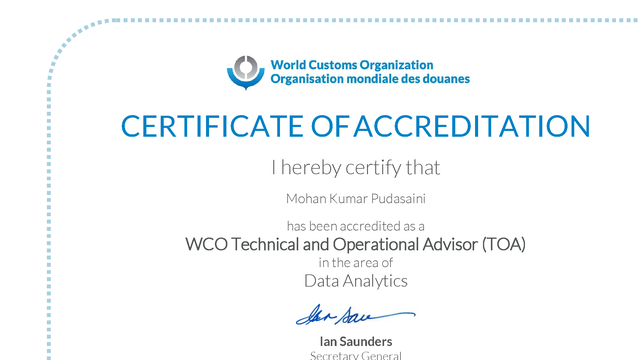
Achieving effective risk management and data analytics has been one of the cornerstones of improving efficiency, transparency, and compliance in Customs. Big data, artificial intelligence, and machine learning make decision-making, risk assessment, and resource allocation within Customs more effective. Data-driven techniques help identify and manage trends, patterns, and trade compliance risks. They also facilitate the targeting and profiling of different threats on the basis of risks. These improvements strengthen transparency and accountability in Customs.
Despite these changes, Nepal Customs still faces challenges in moving to a fully data-rich environment. Issues such as the legal framework for incorporating AI, data strategy, data quality, infrastructure, and capacity building need to be resolved for the effective use of emerging technologies. Customs personnel need orientation and capacity building to gain the maximum benefit from data analytics. It is also imperative to foster a culture of innovation within the organization, because progress is continuous once resistance to change is removed.
Enhancing security measures is another priority for Nepal Customs in the fight against illicit trade and smuggling. In this regard, non-intrusive inspection, enhanced border control, and especially cooperation with international partners will be of paramount importance. Furthermore, a proactive stance towards crisis preparedness, especially for environmental and cyber crises, will build resilience and maintain stability.
As global trade continues to transform, Nepal Customs is at a crucial point, facing both opportunities and challenges. Achieving modernization is not only about utilizing new techniques, but also about enabling an entire system that can integrate innovation and economic growth while ensuring safety. Nepal’s Customs operations can be transformed into a powerful engine for national economic development by purposefully putting resources into the digital infrastructure, enhancing the ability of people, and cultivating a culture of constant change. The way forward is an integrated, comprehensive, and bold approach that emphasizes the adoption of technology while preserving the human expertise that delivers positive impact.